



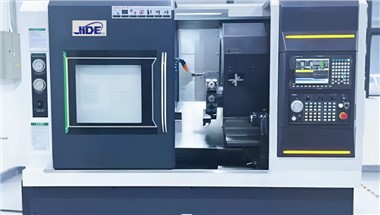
CNC Lathe C Axis
Maximum turning diameter of bed ømm Ø520
The maximum turning diameter of the table ømm Ø360
Maximum machining diameter ømm Ø500
turning length mm 1000
X-axis travel mm 300
Z axis travel mm 1100
R-axis tailstock travel mm 1100
Y axis maximum stroke mm 100(+50,-50)
C axis travel degree 360


Machine parameter
|
|
Parameter |
Unit |
JD-810 |
|
|
● |
The scope of work: |
|
|
|
|
|
Maximum turning diameter of bed |
ømm |
Ø520 |
|
|
|
The maximum turning diameter of the table |
ømm |
Ø360 |
|
|
|
Maximum machining diameter |
ømm |
Ø500 |
|
|
|
turning length |
mm |
1000 |
|
|
|
|
|
|
|
|
● |
Processing stroke: |
|
|
|
|
|
X-axis travel |
mm |
300 |
|
|
|
Z axis travel |
mm |
1100 |
|
|
|
R-axis tailstock travel |
mm |
1100 |
|
|
|
Y axis maximum stroke |
mm |
100(+50,-50) |
|
|
|
C axis travel |
degree |
360 |
|
|
● |
Transmission Specifications: |
|
|
|
|
|
X-axis ball screw |
1 set |
4012-C3 |
|
|
|
Z axis ball screw |
1 set |
4012-C3 |
|
|
|
X-axis motor power |
KW |
3 |
|
|
|
Z axis motor power |
KW |
3 |
|
|
|
Power head motor power |
KW |
3.1 |
|
|
|
Y axis motor power |
KW |
2 |
|
|
● |
feed |
|
|
|
|
|
G00 Rapid feed (X axis) |
m/min |
20 |
|
|
|
G00 Rapid feed (Z axis) |
m/min |
20 |
|
|
|
G01 cutting feed |
m/min |
12/12/12 |
|
|
|
|
|
|
|
|
● |
Bed structure: |
|
|
|
|
|
Bed and horizontal slope |
degree |
45° |
|
|
|
Rail span |
mm |
420 |
|
|
|
Bed casting |
type |
TH-300 |
|
|
|
Bed style |
/ |
Integral casting bed |
|
|
|
|
|
|
|
|
● |
Sleeve-type spindle unit: |
|
|
|
|
|
Spindle speed |
rpm |
3500 |
|
|
|
Spindle through hole |
ømm |
66 |
|
|
|
Bar Stock Hole |
ømm |
51 |
|
|
|
Spindle Shaft end type |
/ |
A2-6 |
|
|
|
Spindle inner cone type |
1:20 |
1:20 |
|
|
|
Spindle motor power |
KW |
7.5/11 |
|
|
|
Optional hydraulic chuck |
inch |
8 |
|
|
|
Spindle indexing C axis |
degree |
360 |
|
|
● |
Tailstock unit: |
|
|
|
|
|
Hard rail full hydraulic tailstock |
set |
1 |
|
|
|
Thimble diameter |
ømm |
90 |
|
|
|
Tailstock maximum stroke |
mm |
120 |
|
|
|
Tailstock taper model |
MT5 |
MT5 |
|
|
|
|
|
|
|
|
● |
Turret unit: |
|
|
|
|
|
Turret Center Height |
mm |
170 |
|
|
|
Turret disc size |
Mm |
290/330 |
|
|
|
Turret station |
T |
12 |
|
|
|
Tool holder model |
ER-32 |
BMT-55*2pcs |
|
|
|
Round Hole Holder Model |
|
25/32 |
|
|
|
Square knife seat |
|
25/25 |
|
|
|
Boring tool holder |
Tool holder diameter |
40 |
|
CNC lathe C axis adopts high-grade steel plate baking paint, which significantly prolongs the service life
The whole machine adopts sheet metal frame structure, high-quality cold-rolled steel plate, light weight and high strength
Excellent mechanical properties of toughness, hardness and rigidity
Imported turret
Taiwan 12-station servo turret, the end face and side can be equipped with power heads. It can realize the drilling, tapping and milling of the end face and side, and is suitable for one-time forming processing of complex non-ferrous metals
12 inch controller
CNC lathe C axis uses Taiwan SYNTEC/FANUC/SIEMENS control system, which can customize programming and call macro programs, G command fast positioning, can set the maximum spindle speed limit, can realize a single program call, and finish turning cycle. It can be customized according to user needs Customized control systems such as: Fanuc, Siemens, etc.
When the product leaves the factory, it will be equipped with a lathe program command operation manual
Lubrication/cooling system
Adopt Taiwan lubricating oil pump automatic lubrication system, build a complete lubrication system to realize the recycling and reuse of cutting fluid, use domestic famous brand cooling water pump to ensure long-term trouble-free operation of the machine tool
Servo control circuit system, in line with ISO9001 wiring standards
The line marking is clear and clear, which is convenient for future maintenance and upgrading. It is equipped with multiple protection devices to ensure the smooth operation of our processing. It is equipped with USB and Ethernet interfaces.


How to maintain the CNC turning center?
The quality of CNC turning center maintenance can directly affect the processing quality and work efficiency of parts. Such lathe standards must prevent direct sunlight and other heat radiation, and prevent places that are too humid, too dusty, or have corrosive gases. It is not suitable for long-term shutdown. The best choice is to turn on the power once or twice a day, and run it dry for about an hour each time, so as to use the heat generated by the lathe itself to reduce the relative humidity inside the machine, so that the electronic components will not be damp. At the same time, it can also find out whether there is a battery alarm in time to prevent the loss of system software and data. The point inspection of CNC lathes with inclined beds is the basis for state monitoring and fault diagnosis, and basically involves the following information:
1. Fixed point. The first step is to confirm how many maintenance points a slanted bed CNC lathe has, scientifically analyze the machine equipment, and select the location that is likely to cause problems. You only need to "watch" these maintenance points, and problems will be discovered in time.
2. Calibration. Standards should be formulated for each maintenance point one by one, such as clearance, temperature, pressure, flow rate, tightness, etc., all need to have accurate quantity standards, as long as they do not exceed the standard, it is not a problem.
3. Regularly. When to check once, the inspection cycle time should be given, and it should be confirmed according to the actual situation.
4. Fixed items. What items to check at each maintenance point also need to be clearly stipulated.
5. Decide on people. Who conducts the inspection, whether it is the operator, maintenance personnel or technical personnel, should be assigned to the person according to the location of the inspection and the technical accuracy standards.
6. Statutes. How to check also needs to have standards, whether it is manual observation or measurement with instruments, whether to use ordinary equipment or precision instruments.
7. Check. The scope and process of the inspection must be standardized, whether it is inspection during production operation or shutdown inspection, disassembly inspection or non-disassembly inspection.
8. Record. The inspection should be carefully recorded and filled out in accordance with the prescribed file format. To fill in the inspection data, the deviation from the standard, the judgment impression, and the handling opinion, the inspector must sign and mark the inspection time.
9. Disposal. Those that can be dealt with and adjusted in the middle of the inspection should be dealt with and revised in a timely manner, and the treatment results should be recorded in the disposal record. Those who are incapable or unable to deal with it shall be reported to the relevant departments in time and dealt with according to the arrangement. However, anyone who disposes at any time needs to fill in the disposal records.
10. Analysis. Both inspection records and disposal records require regular systematic analysis to find weak "maintenance points". That is, points with high equipment failure rates or links with large losses, put forward suggestions, and submit them to the design department for continuous improvement to design.

Népszerű tags: cnc lathe c axis, China, suppliers, manufacturers, factory, price, for sale, made in China, rugalmas őrlési művelet, CNC megmunkálási garancia, Carbide End Mill a szokásos geometriák őrlésére, szilikon ragasztó adagoló, CNC maró maró műtét, CNC marógép programozási felülettel
Egy pár
CNC esztergagépKövetkező
Vízszintes CNC esztergagépAkár ez is tetszhet


A szálláslekérdezés elküldése